
Once many makers outgrow PLA, the next material they often explore is PETG.
And for good reason.
PETG combines much of PLA’s ease of printing with added toughness, heat resistance, and chemical durability — making it one of the most versatile filaments in 3D printing.
Whether you're printing functional prototypes, outdoor parts, or everyday-use components, PETG is a material worth understanding.
In this guide, we’ll cover what PETG is, how it prints, where it shines, and when it may be a better choice than PLA or ABS.
What Is PETG Filament?
PETG stands for Polyethylene Terephthalate Glycol.
It’s a modified version of PET — the same plastic commonly used in water bottles — enhanced with glycol to improve toughness, reduce brittleness, and make it easier to print.
That modification gives PETG an appealing balance of properties:
- Easy enough for many beginners
- Tougher than PLA
- More heat resistant
- Excellent layer bonding
- Good chemical resistance
- Lower warping than ABS
Many users think of PETG as the material sitting between PLA and ABS.
And that’s often accurate.

Why PETG Is So Popular
PETG has become a favorite because it solves many limitations of PLA without adding as much difficulty as ABS or Nylon.
It offers:
- Better durability
- Higher temperature resistance
- Stronger layer adhesion
- Outdoor suitability
- Good chemical resistance
That makes PETG especially attractive for functional prints.
PETG Print Settings
PETG rewards good tuning.
Typical settings:
Nozzle Temperature
220–260°C
Heated Bed
70–85°C
Cooling
Moderate cooling often works best
(too much cooling can weaken layer adhesion)
Retraction (starting point)
- 1–2 mm for direct drive
- 20–30 mm/s retraction speed
Because PETG tends to ooze more than PLA, tuning retraction and travel settings is important.
PETG Printing Tips for Better Results
Slow Down the First Layer
20–30 mm/s often improves adhesion.
Use a Release Layer
PETG can bond aggressively to some build plates.
Common solutions:
- Glue stick
- Painter’s tape
- PEI (with care)
This helps avoid damaging your build surface.
Increase Travel Speed
Faster travel moves can reduce stringing.
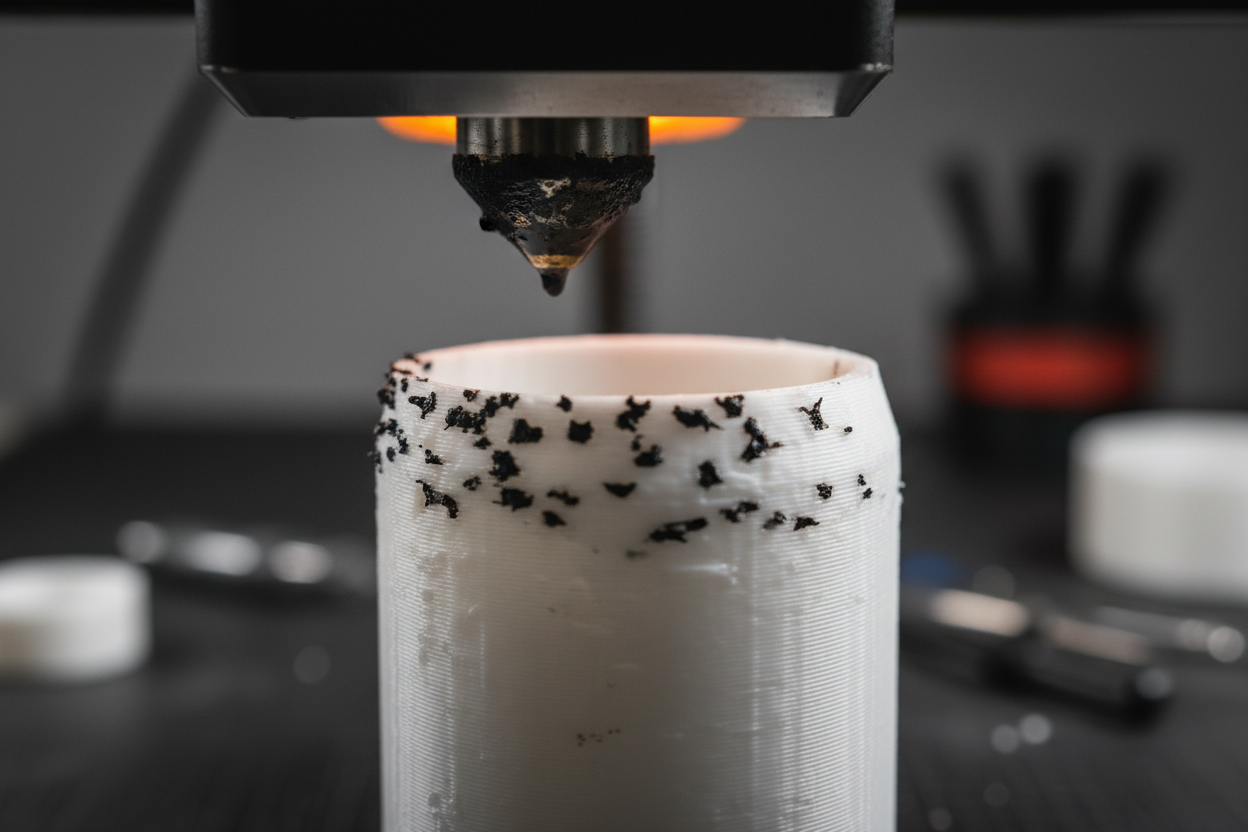
Watch for Nozzle Buildup
A silicone sock often helps prevent material sticking around the nozzle.

Advantages of PETG
Stronger Than PLA
PETG generally offers better durability and layer bonding.
Great for:
- Brackets
- Tool holders
- Functional prototypes
- Mechanical parts
Better Heat Resistance
PLA may soften around 60°C.
PETG can often handle around 70–80°C or slightly higher.
That matters for:
- Car accessories
- Warm environments
- Outdoor use
Excellent Chemical Resistance
One of PETG’s biggest strengths.
It resists exposure to:
- Acids
- Alkalis
- Oils
- Moisture
That makes it useful for utility and workshop parts.
UV and Outdoor Durability
PETG is often a better outdoor choice than standard PLA.
Useful for:
- Garden tools
- Outdoor clips
- Signage
- Automotive accessories
Transparency
One unique feature of PETG is its potential for clear prints.
Printed slowly, transparent PETG can produce impressive translucent or glass-like effects.
Great for:
- Light diffusers
- Vases
- Display pieces

PETG Limitations
No filament is perfect.
PETG has tradeoffs.
Stringing and Oozing
Probably PETG’s biggest challenge.
Without tuning, prints can develop:
- Fine strings
- Blobs
- Surface artifacts
Stickiness During Printing
PETG can sometimes feel “gummy” compared with PLA.
Dialing in temperatures matters.
More Difficult Than PLA
Still beginner-friendly — but less forgiving.
PETG often needs more tuning than PLA.
Limited Post Processing
Unlike ABS, PETG can’t be acetone smoothed.
Finishing options are more limited.
PETG vs Other Filaments
| Material | Strength | Heat Resistance | Chemical Resistance | Ease of Printing |
|---|---|---|---|---|
| PLA | Moderate | Low | Low | Easiest |
| PETG | High | Medium-High | High | Moderate |
| ABS | High | High | Moderate | Harder |
| TPU | Flexible | Medium | Good | Moderate |
| Nylon | Very High | High | High | Difficult |
PETG vs PLA
A common beginner question:
Choose PLA If You Want:
- Easiest printing
- Cosmetic models
- Crisp detail
- Beginner-friendly setup
Choose PETG If You Want:
- Stronger parts
- Better heat resistance
- Outdoor durability
- Functional prints
Many makers use both.
PLA for visual parts.
PETG for working parts.

What Is PETG Used For?
PETG works across hobby and professional applications.
Functional Prototypes
- Enclosures
- Mechanical parts
- Fixtures
Everyday Utility Prints
- Tool handles
- Storage solutions
- Phone mounts
Outdoor Parts
- Garden clips
- UV-exposed brackets
- Automotive accessories
Robotics and Engineering
- Structural components
- Prototype assemblies
- Robot parts
Does PETG Need Special Hardware?
Usually not.
Most printers can handle standard PETG.
Typical setup:
- Heated bed recommended
- Standard nozzle fine
- Enclosure optional
One exception:
If printing PETG above ~240°C regularly, an all-metal hotend is often preferred.
That’s especially important if avoiding PTFE heat limitations.
Is PETG Good for Beginners?
Yes — especially once you’ve printed some PLA.
PETG is often the logical “next material” because it introduces stronger functional printing without the higher difficulty of ABS or Nylon.
It’s one of the most useful filaments to learn.
Final Thoughts
PETG has earned its reputation as one of the most versatile 3D printing materials available.
It combines durability, heat resistance, chemical resistance, and practical ease of use in a way few filaments can.
For makers moving beyond decorative prints into real-world functional parts, PETG is often the next step.
And often a long-term favorite.
FAQ
Is PETG stronger than PLA?
Generally yes. PETG is usually tougher and more durable than standard PLA.
What temperature should PETG print at?
Most PETG prints between 220–260°C with bed temperatures around 70–85°C.
Is PETG hard to print?
PETG is moderately easy to print, though usually requires more tuning than PLA.
Is PETG better than ABS?
It depends. PETG is easier to print and more chemical resistant, while ABS offers higher heat resistance.